BES Hackathon 2025
Last week I went to the BES Methods in Ecology and Evolution Hackathon Event, the BES being the British Ecological Society, and it was so exciting to be in a room full scientists discussing academic papers. I fist went to a Hackathon even in New York during my Nottinghamshire Roosevelt Scholarship and thought the concept was so cool. A Hackathon is an event in which a large number of people meet to engage in collaborative computer programming in attempt to solve a question or problem.
The BES Event was based at their Offices in London and we gathered to talk about paper reproducibility, accessibility to code used in the study as well as the data to run the code with. So we checked through papers submitted to the BES Journals to check and score papers as to whether they followed guidelines and open access policies.
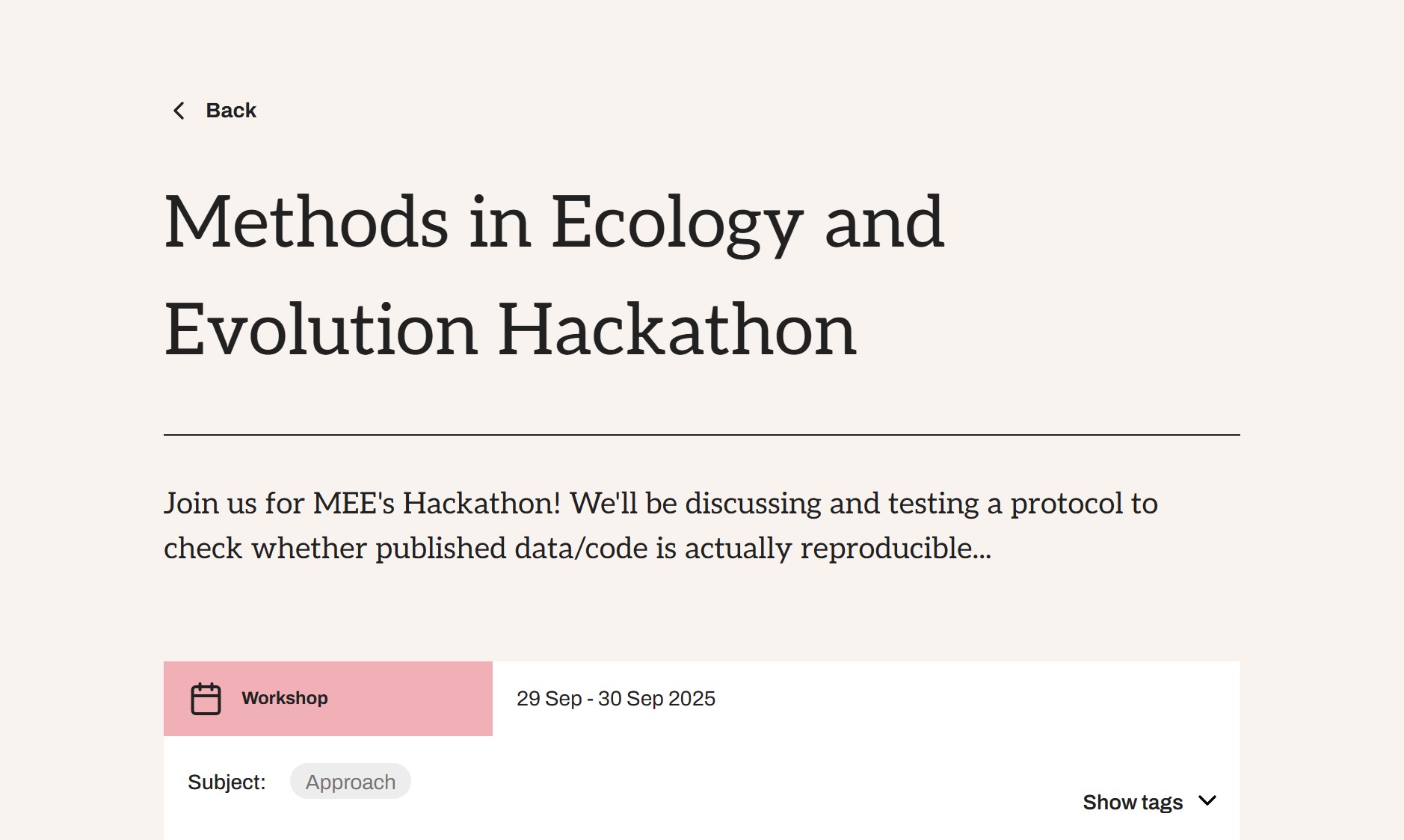
Reproducibility is important for scientific rigour and it allows us to re-use data and code efficiently for further studies. The BES Hackathon event tested a protocol for assessing whether data/code associated with published literature is actually reproducible, and if not, why. I went in person on the Monday however sadly did not attend the second at the Natural History Museum which is one of my favourite places! During the day I met some really interesting people, studying a whole heap of different things and people from across the globe were logged in online.
Accessibility in academia faces a "pay-to-read" versus "pay-to-publish" dilemma. While Open Access (OA) removes financial barriers for readers, it often erects new barriers for authors through high fees, shifting inequality rather than eliminating it. The core tension in academia is that the public funds the majority of scientific research, through government grants and taxes, yet the finished results are often privatized. With an average paper costing between £25-50 per pdf, even some scientists don't have access to these papers if they are not in academic circles.
Then even when financial barriers are removed, there can also be language barriers and I mean this by scientific language making it harder for the general public to understand. Overly complex words and terminology keeps scientists and the public out of touch which is why sci comm is an important tool for knowledge sharing. Being able to share your research with a broader audience is important to ensure people care about subjects like conservation, ecology and our natural environment. For a long time science has been complex and gate keeping practices have kept the people out of the know, especially those in lower income areas. Science Communication (or Sci Comm) is more than just simplifying facts… it is about providing context, generating excitement, and enabling informed decision making.
Another key issue, and one discussed at the BES Event, is the actual spoken language used and the barrier faced by some people of that country. For instance, a lot of studies that have taken place in South America or Africa can be in English due to foreign research team or wanting to publish in a certain journal, which leaves native speakers of that country unable to read the studies.
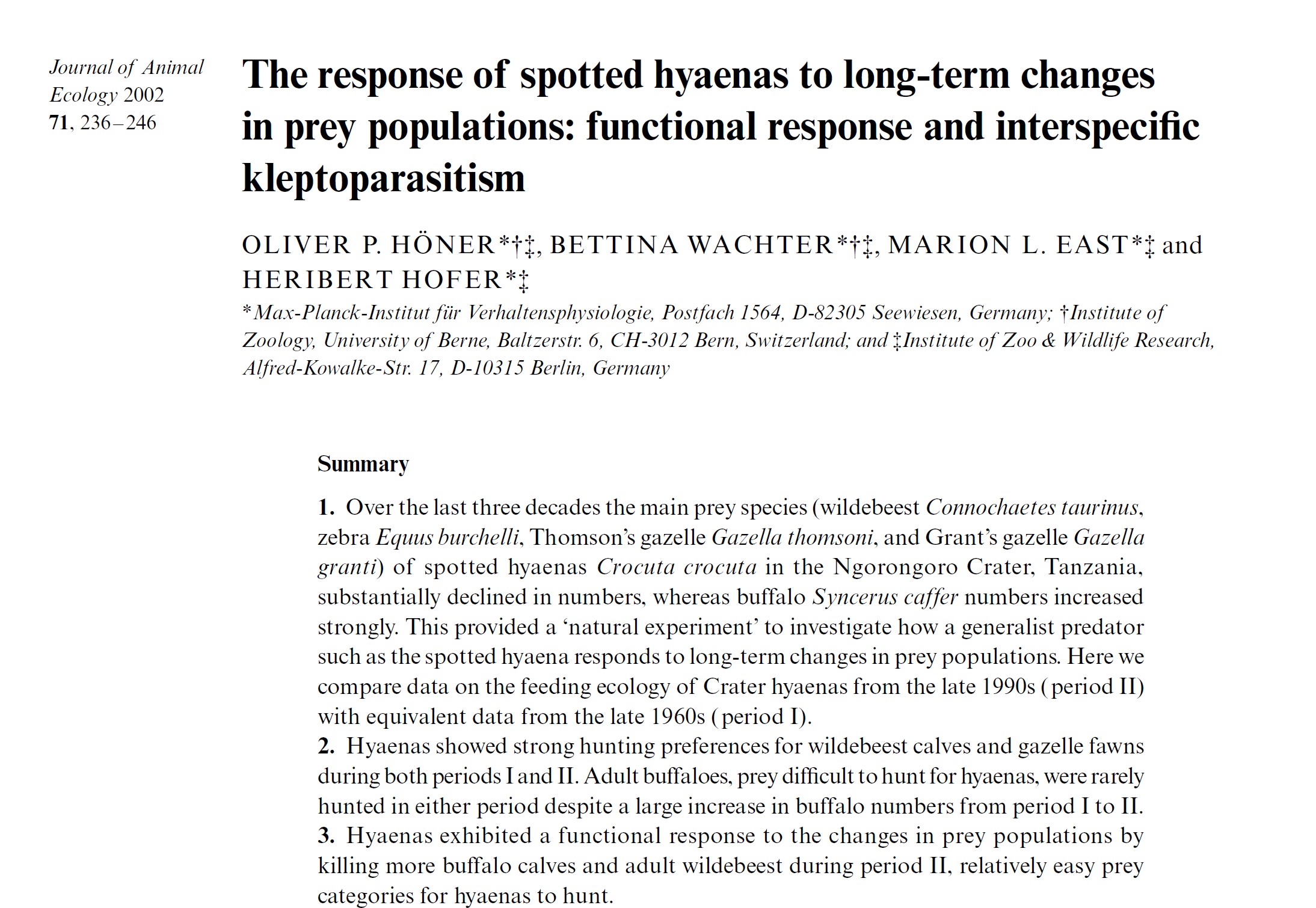
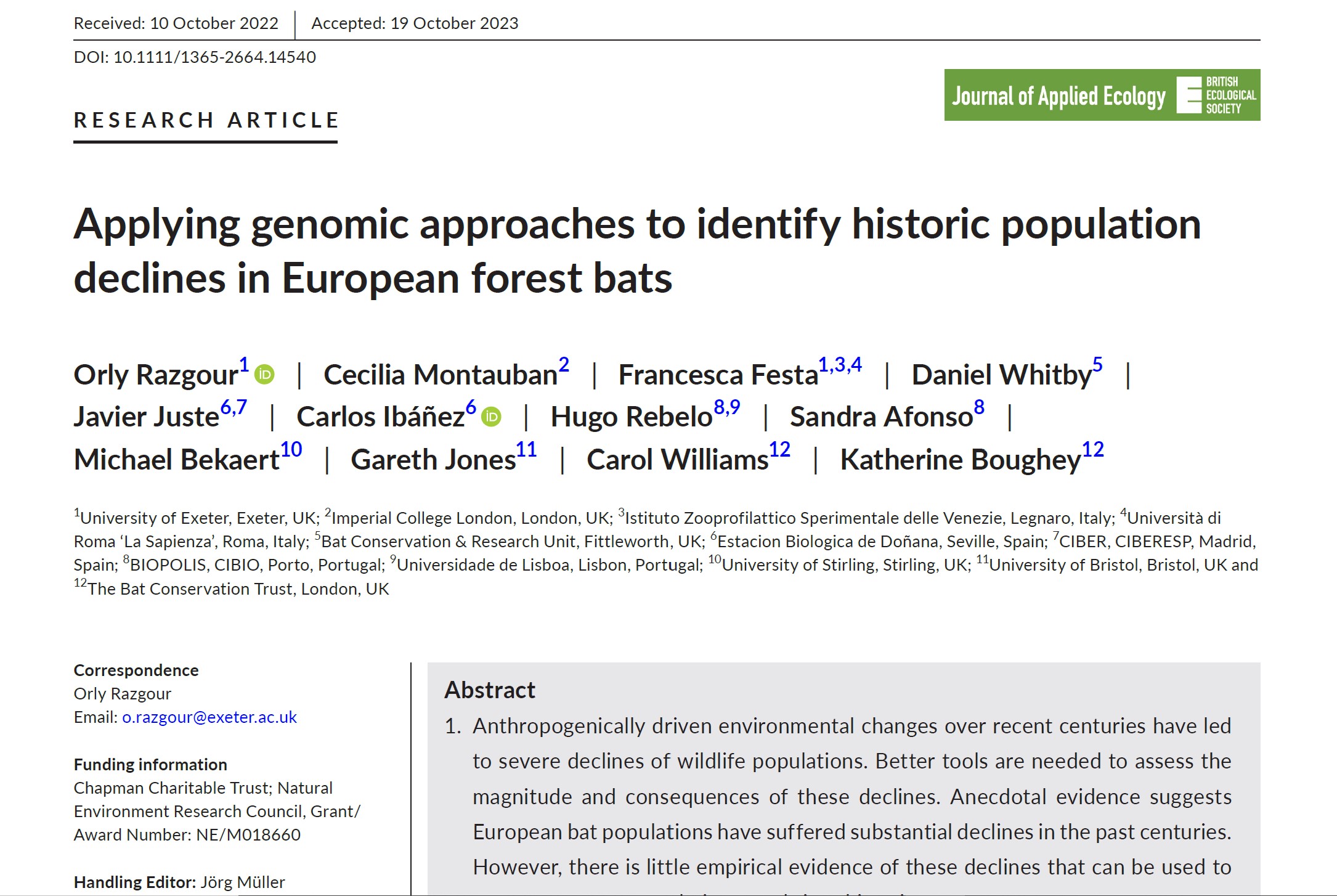
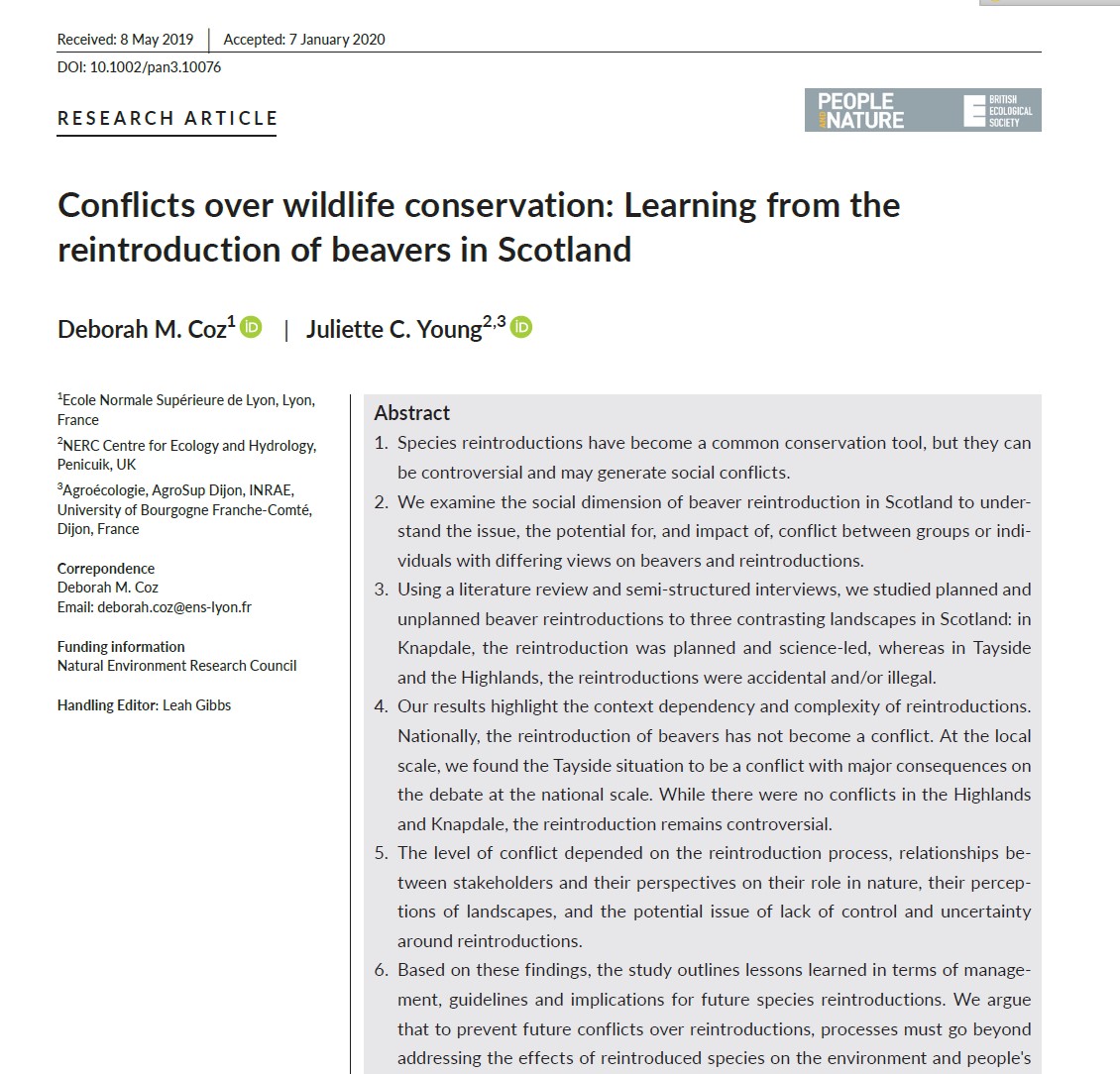
Some of the papers I was involved in looking into were:
– Public health and economic benefits of spotted hyenas Crocuta crocuta in a peri-urban system by Chinmay Sonawane and Team –
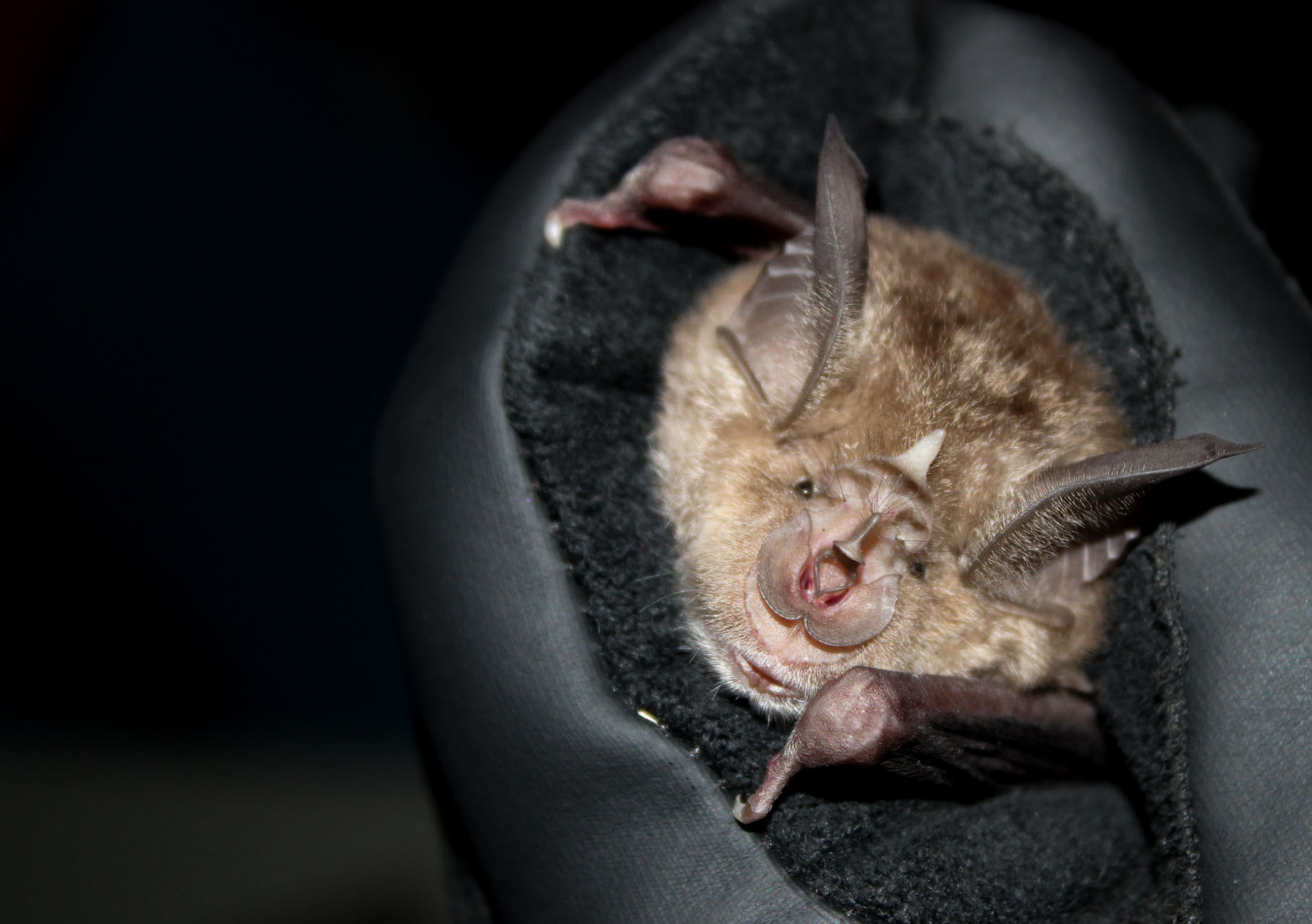
– Applying genomic approaches to identify historic population declines in European forest bats by Orly Razgour and Team
– Conflicts over wildlife conservation: Learning from the reintroduction of beavers in Scotland by Deborah Coz and Juliette Young